
How to Choose a Bedside Crib: Safety, Size and Features Parents Should Check
August 5, 2026 · 4 min read
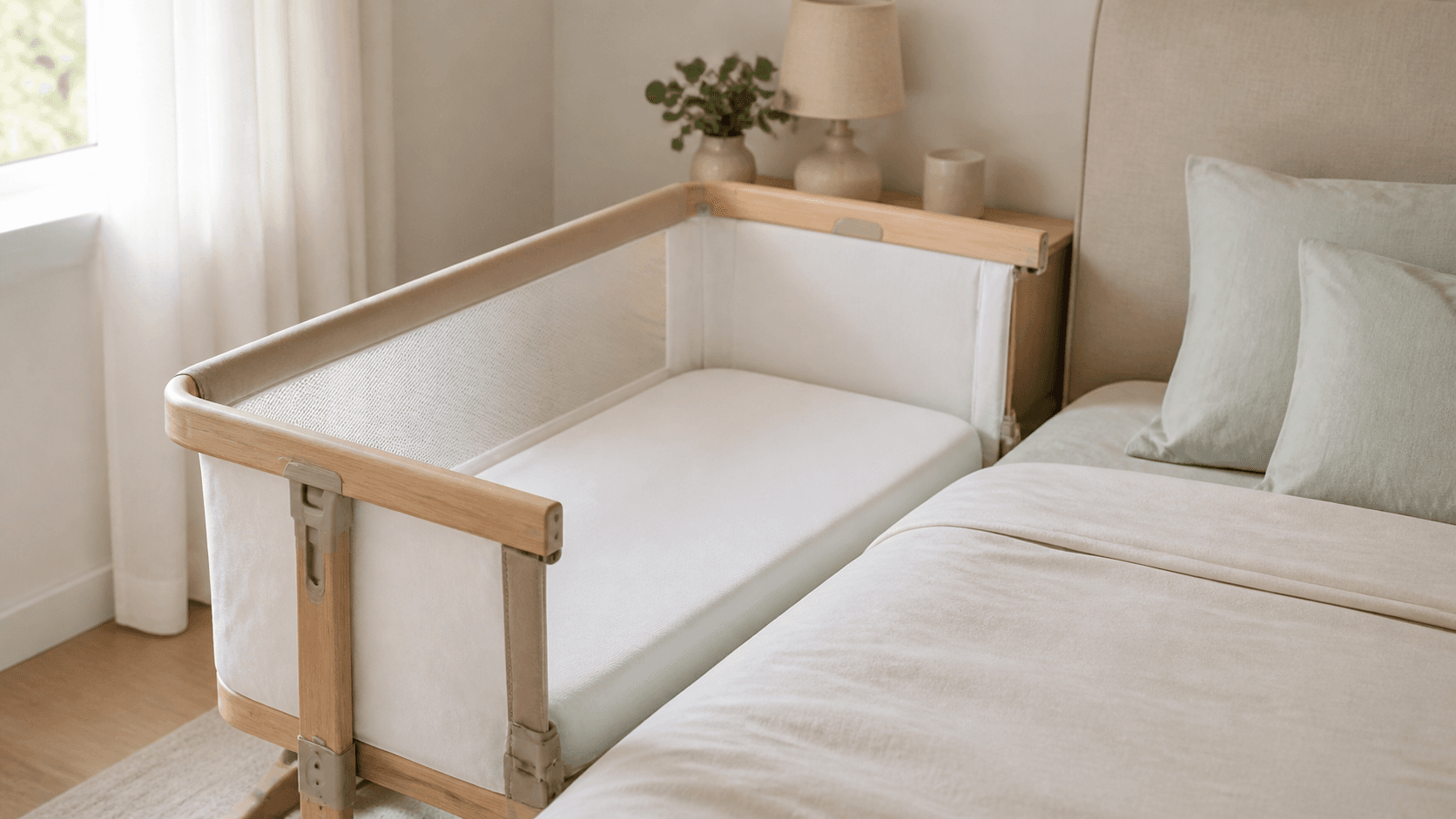
A bedside crib can make the first months feel easier. Your baby is close enough for night feeds, soothing and quick checks, but still has a separate sleep space. The important part is choosing one that is safe, stable and suitable for your bed.
Start with the basic rule: your baby needs a firm, flat, separate sleep surface. Safe sleep guidance from organizations such as the CPSC, AAP and NHS is consistent on the essentials: baby should sleep on their back, on a firm mattress, with a fitted sheet and no pillows, bumpers, loose blankets, soft toys or sleep positioners.
Separate but close is the goal
A bedside crib should not turn the adult bed into the baby’s sleep space. It should give your baby their own firm, flat surface while keeping them within reach. That difference matters, especially during night feeds when everyone is tired.
Look for a product that is clearly intended for infant sleep and sold with proper instructions. Avoid products that look cozy but create gaps, padding, incline or loose fabric around the baby. For sleep, simple is safer.
Check safety standards first
The first thing to check is whether the bedside crib meets the safety standards in your country. In the United States, bedside sleepers are covered by CPSC requirements. In other regions, look for the relevant local safety certification and buy from a trusted retailer.
Be careful with unknown marketplace listings, especially if the seller gives no manual, no brand support, no clear testing information or vague claims. A bedside crib is not the place to gamble on an unverified product.
Measure your bed before buying
A true bedside crib should be secured properly so it cannot drift away and create a gap. The attachment straps or system should be clear, strong and compatible with your bed frame.
If your bed is unusually high, low, boxed-in or has storage drawers, measure before buying. Check the height range of the crib and compare it with your mattress height. Do not improvise with books, blocks or extra mattresses to change the height.
The mattress should be firm and fitted
The mattress should be firm, flat and made for that exact crib. Do not add a second mattress, topper or memory foam pad. A soft mattress may look comfortable to adults, but babies need a surface that does not sink around the face.
The fitted sheet should be made for the mattress size so it stays tight. If the sheet bunches, pulls loose or leaves gaps, it is not the right fit.
Mesh sides are useful, but inspect them
Mesh sides can improve visibility and airflow, which is helpful during night checks. Still, the mesh should be tight, intact and securely attached. There should be no tears, loose threads, broken zippers or gaps where fabric pulls away from the frame.
If buying second-hand, inspect every seam and locking point. Make sure all original parts, straps, mattress and instructions are included. If anything is missing, choose another crib.
Features parents should question
Rocking, vibration, storage pockets, wheels and drop-down sides may sound useful, but sleep safety comes first. Ask whether each feature makes night care safer and easier, or simply adds another thing that can be used incorrectly.
Inclined sleep surfaces are not recommended for infant sleep. If a baby falls asleep in a swing, lounger, rocker or similar product, move them to a firm, flat crib, bassinet, play yard or bedside sleeper.
Know when to stop using it
A bedside crib is usually a short-term product. Check the age, weight and milestone limits. Many babies outgrow bedside sleepers once they can roll, push up or sit, depending on the model.
Read the manual before the baby arrives so you know when to transition. It is easier to plan the next sleep space calmly than to make a rushed decision after your baby has already reached the limit.
Second-hand bedside cribs: what to check
Used baby gear can be practical, but be strict. Check recalls, confirm the model number, inspect the frame, test the locks and make sure the mattress is original or officially approved for that crib. Avoid any product with missing straps, damaged mesh, unknown history or a mattress that does not fit tightly.
Register the product if a registration card is provided. That helps you receive safety updates or recall notices.
The calmest choice is usually the simplest
The best bedside crib is not the fanciest one. It is the one that fits your bed correctly, keeps your baby on a firm flat surface and makes night care easier without adding risk. Bare mattress, fitted sheet, secure attachment, clear instructions: those basics matter more than extras.
If you are preparing for your baby’s first months, you may also like our baby name lists, name meaning search and baby eye color calculator. For a playful keepsake before birth, you can also create a future baby portrait with AI Baby Blend.
FAQ
Is a bedside crib safe?
A bedside crib can be safe when it meets recognized safety standards, is assembled correctly, attaches securely to the adult bed and provides a firm, flat, separate sleep surface.
What should not go in a bedside crib?
Do not add pillows, bumpers, loose blankets, stuffed toys, extra mattresses, wedges or sleep positioners. Keep the sleep space bare except for a fitted sheet.
How long can a baby use a bedside crib?
It depends on the model. Always follow the manufacturer’s age, weight and movement limits, especially once your baby starts rolling or pushing up.


Curious what your baby would look like?
Upload one photo of each parent and meet your future baby in about 5 minutes.
Keep reading
Parenting
2027 Baby Shower Ideas: Future Trends, Themes and Personal Touches Parents Will Love
Parenting
2026 Baby Shower Ideas: 25 Modern Themes, Colors and Party Trends
cluster.parenting-gear
Lightest Strollers 2026: What to Know Before Buying a Compact Baby Stroller
cluster.parenting-gear
Best Strollers 2026: How to Choose the Right Pushchair for Your Baby